

M-Pesa Integration Explained: STK Push vs Paybill
A plain-language guide to integrating M-Pesa into your website or system: how STK Push and Paybill (C2B) work, when to use each, and how to reconcile...
Read article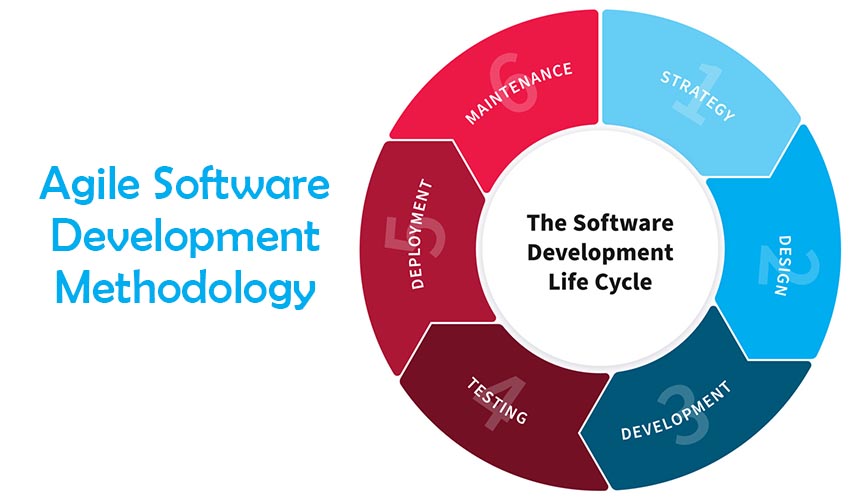
In this article, we are going to discuss the agile methodology its key features, phases, testing methods, and its pros and cons during software development process. Our ever expanding digital world has a growing hunger for more complicated and diverse applications. Unfortunately, this demand collides with high software development failure rates. To address this failure Agile Methodology came into existence.
The Agile methodology began as a novel technique to manage software development in the software development business. Many software development projects were failing or taking far too long to complete, and industry leaders understood they needed to come up with a new, creative solution.
The Iterative Waterfall model was formerly a common way to finish a project. However, today’s developers confront a number of issues while using it to create applications. The key challenges were dealing with customer change requests during project development, as well as the significant cost and time required to make these changes. Therefore, The Agile Software Development Manifesto was created in 2001.
Agile was originally designed to manage software development projects. It has, however, grown to manage projects across all industries, companies, and markets. Now let’s deep dive into the topic and learn more about Agile Methodology
Agile refers to something that is quick or adaptable. A software development approach based on iterative development is referred to as an “agile process model.” Agile approaches divide projects into smaller iterations or sections and avoid long-term planning. The scope and requirements of the project are defined at the start of the development phase. The number of iterations, duration, and scope of each iteration are all clearly determined ahead of time. Unlike the Waterfall paradigm, both development and testing operations are contemporaneous under the Agile Methodology of software testing.
You may also read 5 Tips to Diminish Risk Elements in a Software Development Lifecycle Importance of Bug Testing Software in Software Development
In the Agile process model, each iteration is a small-time “frame” that lasts anywhere from one to four weeks. This time frame is termed as Time Box i.e. the amount of time taken to finish an iteration. The greatest length of time required to provide an iteration to clients is referred to as a time-box. As a result, the end date for an iteration remains unchanged. Though, if necessary, the development team might choose to limit the delivered functionality during a Time-box in order to meet the deadline.
The delivery of an increment to the client after each Time-box is the basic principle of the Agile approach. The segmentation of the complete project into smaller pieces helps to reduce the total project delivery time requirements while minimizing project risk. Before a working product is demonstrated to the client, each iteration requires a team to go through the entire software development life cycle, which includes planning, requirements analysis, design, coding, and testing.
The four essential values of agile software development are highlighted:
Different phases of Agile Methodology are defined in the below points;
In this article, we have discussed the agile methodology in detail. The above-mentioned sections talk about its pros and cons, what was the need for Agile in software engineering. In order to avoid the last-minute hassle, this model was introduced and made the life of developers and testers easy. Moreover, this model is entirely focused on customer satisfaction as it involves frequent releases and client reviews at each release instead of one release on a long-term basis that has given a boom to the software industry in maintaining the software quality.
A plain-language guide to integrating M-Pesa into your website or system: how STK Push and Paybill (C2B) work, when to use each, and how to reconcile...
Read articleDiscover how custom software can boost your business productivity, enhance security, and streamline your operations with tailored functionality.
Read articleIntroduction As technology advances at an exponential rate, the latest trends in software development landscape continues to evolve, driven by emergin...
Read article

Join the conversation
Leave a comment
Your email address will not be published. Comments are moderated before they appear.