

M-Pesa Integration Explained: STK Push vs Paybill
A plain-language guide to integrating M-Pesa into your website or system: how STK Push and Paybill (C2B) work, when to use each, and how to reconcile...
Read article
This is an undeniable fact that a software development lifecycle is not a piece of cake. It involves a lot of risk elements. But, how efficiently and professionally you can handle these issues and overcome these risks is the main thing. To diminish these obstacles, it is crucial to analyse and pinpoint them properly. This article is going to highlight how you can spot such stumbling blocks and rectify them in the utmost competent and smooth way.
While developing a software, you should learn to embrace the unfamiliar. It is true that it is not possible to foresee the entire project outcome from the beginning. In the development lifecycle, such stages might come, where things won’t go as planned and might cause tension, stress and pressure for the development team. In such scenario, the key aspect is agility. You should go ahead step by step and should refine the scopes on each step.
The concept of MVP is to come up with an acceptable solution that has minimal, yet super useful feature set. It would not only help the developers to understand how users are accepting the product but would also help to understand the scopes of improvement. The feedback of the first stage is very vital to move forward further in the development cycle. Nowadays, most of the tech startups abide by this MVP concept. It would definitely help to diminish the risks.
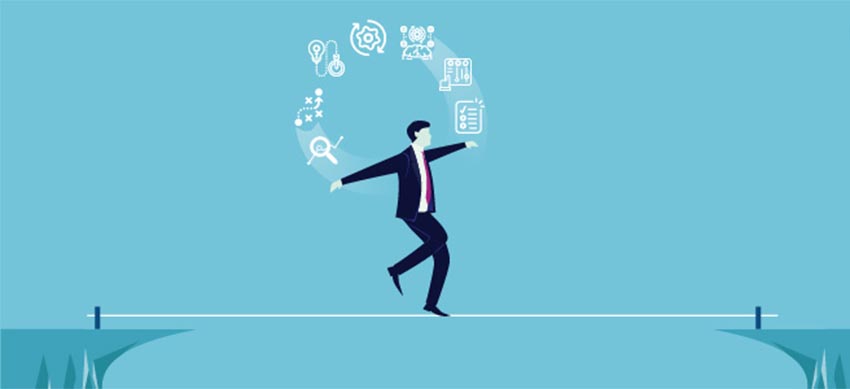
In a software development lifecycle, effective communication with the stakeholders is very important. Keeping entire team along with the stakeholders updated with the project development process through both verbal and written communication is essential. If possible share necessary demonstrations as well.
The sooner you can spot technical glitches and deficiencies, the more you can save extra development costs. Moreover, you would be able to diminish the risk elements on a large-scale. If you come across a technical fault at a later stage, even if it is a minor one, it might leave a large negative impact. Hence, to avoid such risks, be careful from the very first stage.
If the developers part by part proceeds and often release the newly developed features, it becomes easier to test those modules. A thorough testing of these modules makes sure whether those are working absolutely fine or not. Moreover, if the stakeholders want to add some other lucrative or innovative features, they can state it on this stage and the developers can engage themselves to reach the targeted goals.
Thus, the above-mentioned tips might become handy to cut the risk elements in a software development lifecycle.
A plain-language guide to integrating M-Pesa into your website or system: how STK Push and Paybill (C2B) work, when to use each, and how to reconcile...
Read articleDiscover how custom software can boost your business productivity, enhance security, and streamline your operations with tailored functionality.
Read articleIntroduction As technology advances at an exponential rate, the latest trends in software development landscape continues to evolve, driven by emergin...
Read article

Join the conversation
Leave a comment
Your email address will not be published. Comments are moderated before they appear.